2025-10-26
Types and Applications of Anionic Surfactants guide
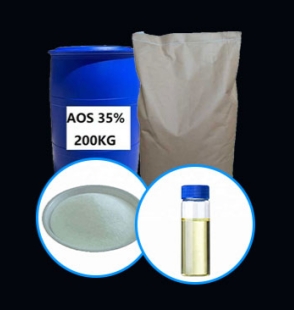
Authoritative guide from Zhengzhou Clean Chemical Co., Ltd — manufacturer of detergent chemicals, basic chemicals & water treatment agents, and subsidiary Henan Tokai Chemical Co., Ltd (specialist in water treatment chemicals). Anionic surfactants represent the most historic, highest-volume, and most diversified category of surfactants. They are characterized by a negatively charged hydrophilic group, thriving in neutral to alkaline media. Common ionic groups include carboxylates, sulfonates, sulfates, and phosphates. This guide covers the five major classes: sulfonates, carboxylate derivatives, sulfates, N-acyl amino carboxylates, and phosphate esters — essential knowledge for formulators in detergents, industrial cleaning, and water treatment. 📌 Key Takeaways: Anionic Surfactants Major classes: Sulfonates, sulfates, carboxylates, N-acyl amino acids & phosphate esters. High-performance options: LAS (cost-effective detergency), FMES (superior degreasing), SLES (mild & thickening), AOS (hard water tolerance). Industrial usage: Detergents, emulsifiers, foaming agents, wetting agents, water treatment formulations. Supplied by: Zhengzhou Clean Chemical (detergent & basic chemicals) & Henan Tokai Chemical (water treatment specialty). 1. Sulfonates – The Workhorse of Anionic Surfactants Sulfonates have the general formula RSO₃M (M = Na⁺ usually), where R can be linear or branched alkyl/alkenyl. They exhibit excellent stability in acids, alkalis, and hard water, much better than conventional soaps. Main functions: emulsifiers,...
Learn more