2026-07-03
Industrial Applications of Surfactants: A Comprehensive B2B Technical Guide
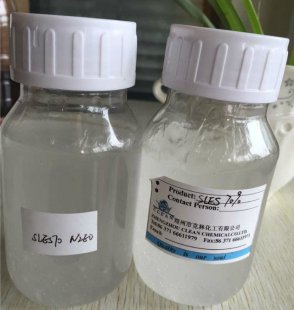
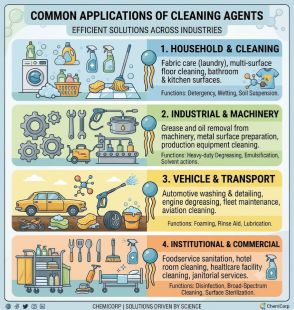
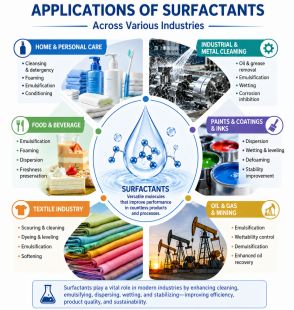
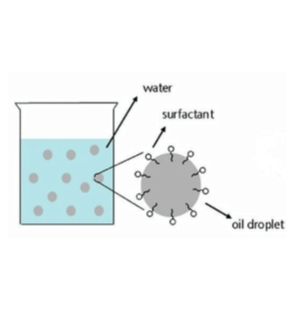
Executive Overview: Surfactants as Industrial Catalysts Surfactants (Surface Active Agents) represent a versatile class of amphiphilic organic compounds designed to dramatically alter interfacial properties. Serving as emulsifiers, detergents, wetting agents, dispersants, and biocides, they act as critical performance enhancers across 14 major global industries. By integrating high-tier surfactant bases like SLES and LABSA with advanced water treatment chemicals like TCCA and SDIC, modern manufacturing systems achieve superior product quality, enhanced efficiency, lower resource consumption, and stable environmental management. The Versatile Frontier of Surfactant Technology Surfactants have shifted from simple household washing components into complex, multi-functional reagents crucial to industrial and agricultural production. They fulfill dozens of distinct roles—operating dynamically as cement water reducers, fabric softeners, leveling agents, dye fixatives, anti-fogging agents, oil displacement formulations, and surface modifiers. Beyond massive utilization in the traditional detergent and cosmetic sectors, surfactants serve as essential process enhancers across high-tech domains and traditional processing plants, proving key to modern product line development and cost optimization. In-Depth Cross-Industry Application Analysis 1. Textiles and Fabric Processing Applied seamlessly across spinning, weaving, sizing, scouring, dyeing, and finishing. Surfactants function as high-efficiency scouring agents, penetrating agents, levelers, softeners, and anti-static additives. Non-ionics excel in emulsification and wetting, while ionics...
Learn more