
Sodium Lauryl Ether Sulfate (SLES) – also known as Sodium Laureth Sulfate – is the most widely used anionic surfactant in shampoo, body wash, and liquid detergent formulations. This article provides a deep dive into its chemistry, cleansing and foaming mechanisms, safety profile, and environmental biodegradability. We also highlight the premium SLES 70% supply from Zhengzhou Clean Chemical Co., Ltd and its subsidiary Henan Tokai Chem Co., Ltd, trusted partners for the personal care and detergent industries.
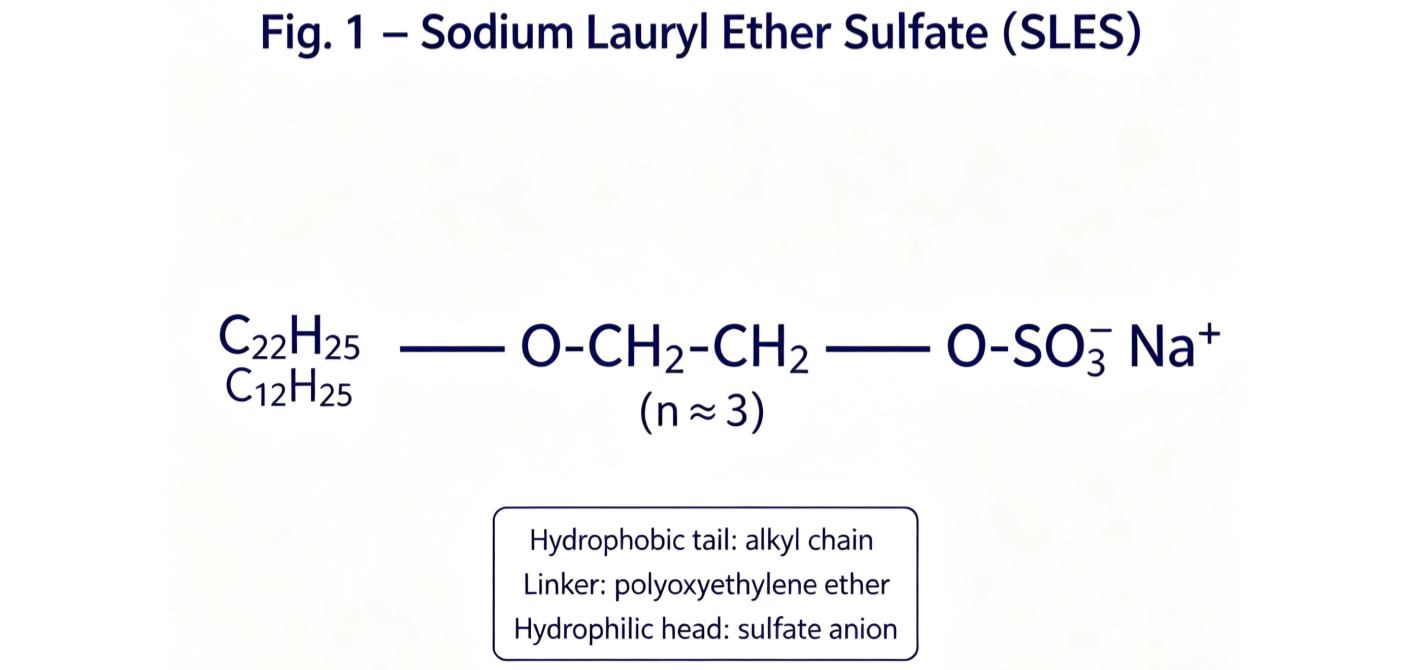
Sodium Lauryl Ether Sulfate (INCI: Sodium Laureth Sulfate, CAS 9004-82-4) is a high-performance anionic surfactant. Its general formula is R(OCH₂CH₂)nOSO₃Na (R = dodecyl), with an average ethoxylation degree (n) of about 3 for most commercial grades. It appears as a white to pale yellow gel paste or viscous liquid, readily soluble in water, and offers outstanding detergency, emulsification, and foaming power.
Thanks to the polyoxyethylene chain, SLES is significantly less irritating than Sodium Lauryl Sulfate (SLS) and exhibits superior hard-water tolerance. This makes it the preferred primary surfactant for premium shampoo formulations.
| Parameter | Typical Value / Description |
|---|---|
| INCI Name | Sodium Laureth Sulfate |
| CAS Number | 9004-82-4 (also 68585-34-2) |
| Molecular Formula | CH₃(CH₂)₁₀CH₂(OCH₂CH₂)nOSO₃Na |
| Appearance (70% active) | White to pale yellow gel paste or viscous liquid |
| Water Solubility | Freely soluble |
| Biodegradability | Excellent – complies with EU Detergent Regulation (EC) 648/2004 |
| Typical Active Content | 70% ± 2% |
In shampoo, Sodium Lauryl Ether Sulfate (SLES) serves as the workhorse surfactant, delivering multiple critical functions:
Modern shampoo research confirms that the critical micelle concentration (CMC) of SLES is around 0.0013 mol/L (≈0.049% w/w). Formulations optimized around this value achieve an excellent balance of foam volume, cleansing efficiency, and skin feel. The high cost-performance ratio of Sodium Lauryl Ether Sulfate makes it the undisputed leading surfactant for the global personal care industry.
Consumers often confuse SLES with SLS, but their mildness profiles differ significantly. The ethoxylated structure of SLES reduces irritation potential substantially, making it more skin-friendly than SLS. The Cosmetic Ingredient Review (CIR) Expert Panel has consistently affirmed the safe use of both SLES and SLS in cosmetic products at authorized concentrations.
In rinse-off formulations like shampoos, the mildness of SLES can be further enhanced by blending with amphoteric surfactants (e.g., cocamidopropyl betaine). Importantly, irritation is a functional property, not a toxicity concern – and modern formulation science has rendered SLES-based shampoos safe and comfortable for daily use, even for sensitive scalps.
| Parameter | SLES (Sodium Laureth Sulfate) | SLS (Sodium Lauryl Sulfate) |
|---|---|---|
| Molecular structure | Contains polyoxyethylene (EO) chain | Straight-chain alkyl sulfate, no EO |
| Skin irritation potential | Lower, milder | Higher – known primary irritant |
| Foaming performance | Excellent, creamy dense foam | Excellent, but often harsher |
| Hard-water tolerance | Good | Moderate |
| Primary applications | Shampoos, body washes, facial cleansers | Heavy-duty cleaners, some older shampoos |
Sodium Lauryl Ether Sulfate exhibits excellent aerobic biodegradability. Studies have shown degradation rates above 98% under suitable conditions with common bacteria such as Pseudomonas aeruginosa. It fully complies with the EU Detergent Regulation (EC) 648/2004 for biodegradability.
In line with global trends toward low-1,4-dioxane products, Zhengzhou Clean Chemical continuously refines its manufacturing process to ensure that the 1,4-dioxane content in its SLES meets the most stringent international standards (e.g., China’s updated limit of 10 ppm, aligned with the EU SCCS 2023 opinion).
Zhengzhou Clean Chemical Co., Ltd is a comprehensive chemical enterprise integrating R&D, production, and international trade, with an annual supply capacity exceeding 150,000 tons. The company’s core portfolio includes detergent chemicals, basic chemicals, and water treatment chemicals, exported to over 40 countries across Europe, the Americas, and Asia.
Our flagship product, Sodium Lauryl Ether Sulfate (SLES) 70%, is widely adopted in shampoo, body wash, liquid soap, and dishwashing liquid formulations. It offers high active content, excellent biodegradability, and low 1,4-dioxane levels – meeting the quality expectations of leading personal care brands.
Main products: Detergent chemicals, basic inorganics, and water treatment agents.
Core focus: Water treatment chemicals (disinfectants, coagulants, scale inhibitors).
💬 Business Inquiries: WhatsApp / WeChat 0086 15638803071 | Clean Chemical: info@cleaningent.com | Tokai Chem: info@hntktcca.com
SLES acts as the main cleansing and foaming agent. It removes oils, dirt, and residues from hair and scalp while producing rich, luxurious lather that improves the wash experience.
Sodium Lauryl Ether Sulfate (SLES) is considerably milder than SLS due to its ethoxylated structure, which reduces irritancy while maintaining superior foaming and detergency.
Our SLES 70% features high purity, low 1,4-dioxane, and consistent quality. With 15,000+ tons annual capacity and ISO/SGS certifications, we offer reliable supply and technical support for global personal care brands.
Copyright © 2013 ZHENGZHOU CLEAN CHEMICAL CO.,LTD | 郑州市克林化工有限公司 All rights reserved